
Regulatory Insights
NMRA cosmetic decisions: ingredient limits, labelling and dossier documents
The published decisions of the Cosmetic Evaluation Subcommittee of the National Medicines Regulatory Authority (NMRA) on ingredient limits, labelling, ISO 22716:2007 certificates and dossier documents.
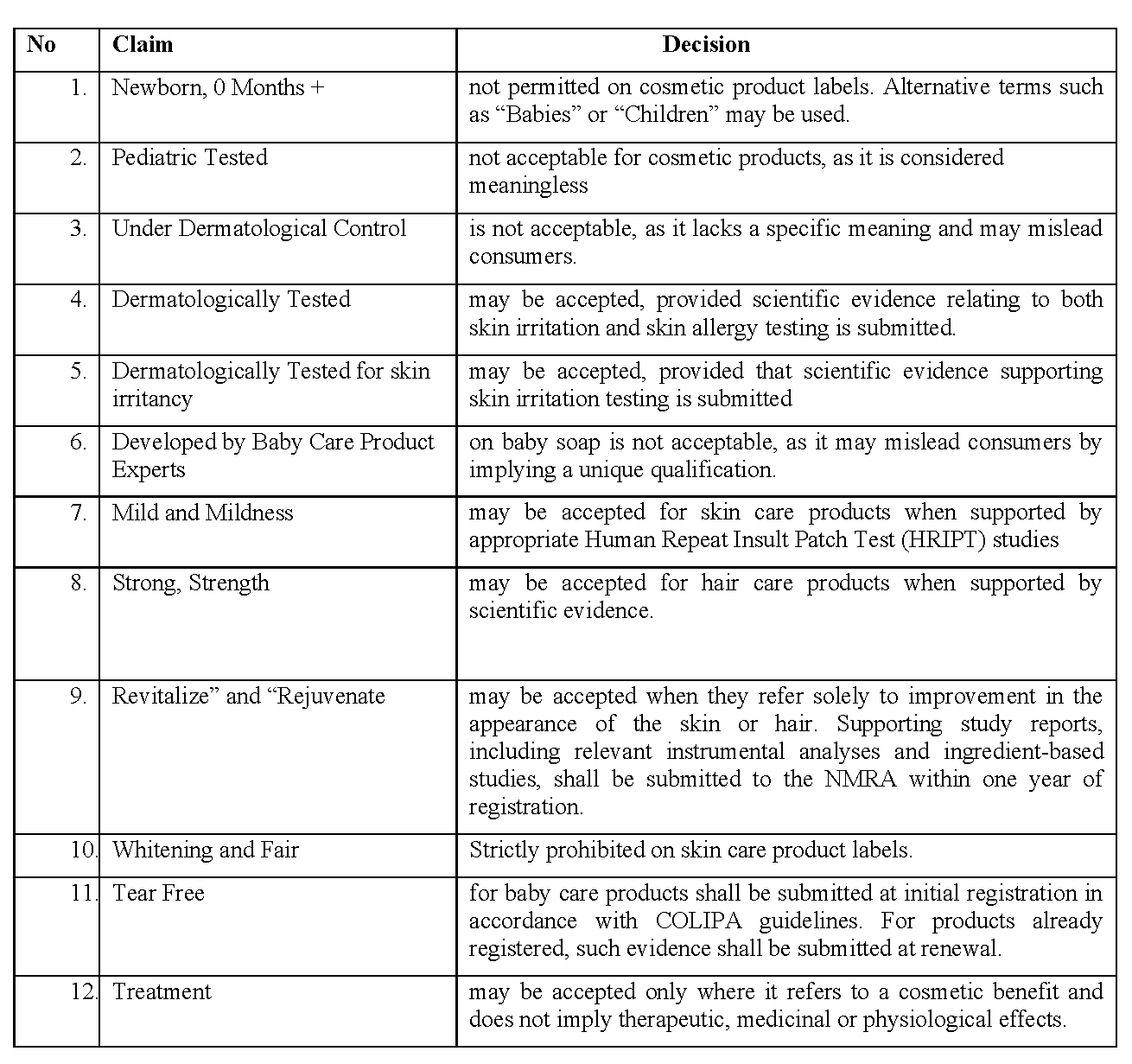
The National Medicines Regulatory Authority (NMRA) publishes the regulatory decisions of its Cosmetic Evaluation Subcommittee on its Cosmetics page. They set limits for certain ingredients, add labelling and packaging rules, and name documents that a cosmetic dossier must contain. The subcommittee's decisions on individual label claims are covered in a separate article, Cosmetic label claims in Sri Lanka. Anyone preparing a cosmetic application, a label or a renewal in Sri Lanka should read them before finalising the file.
This article sets the decisions out by subject. The wording follows the NMRA's published text closely. The NMRA states that the decisions are subject to revision or amendment from time to time, and the page does not give the date on which each decision was taken.
Ingredient limits
- Glycolic acid. Products containing more than 4% glycolic acid will not be registered under the cosmetic category.
- Urea. Products containing more than 5% will not be registered under the cosmetic category. The published text reads "Urea acid".
- Glutathione. Products containing glutathione in concentrations below 2% (w/w) are permitted to be registered as cosmetics. Claims such as "Contains glutathione" and "whitening", or any similar meaning, are not permitted. Where precursors of glutathione are present, the decision is made case by case.
Salicylic acid
For purposes other than use as a preservative, the published limits are:
- Rinse-off hair products: 3.0%.
- Other products, except those in the next line: 2.0%.
- Body lotion, eye shadow, mascara, eyeliner, lipstick, roll-on or non-spray deodorant, and oral products: 0.5%.
In all three cases the decision excludes preparations for children under 3 years of age, and applications that may lead to exposure of the end user's lungs by inhalation.
As a preservative, the limit is 0.5% for salicylic acid and 0.5% (as acid) for its salts. Salicylic acid is not to be used in products for children under 3 years of age or in applications that may lead to inhalation exposure. Its salts are not to be used in products for children under 3 years of age, except for shampoos.
Labelling and packaging
- Cosmetic products intended for hotel use shall be clearly labelled "For Hotel Use Only".
- An appropriate warning for pregnant women shall be included on the labels of all cosmetic products containing retinol.
- For cosmetic products marketed locally, directions for use shall be provided in English, Sinhala and Tamil. They may be on the primary packaging, the secondary packaging or an insert leaflet.
- For products intended for export markets, directions for use may be provided in English only, on primary and secondary packaging.
- Applicants intending to carry out relabelling shall submit two copies of the proposed label artwork.
Manufacturing sites and ISO 22716:2007 certificates
- ISO 22716:2007/2017 certificates bearing the scope "Ayurvedic Cosmetics" are not acceptable, because "Ayurvedic Cosmetics" is not a recognised cosmetic product category. Applicants shall obtain an amended certificate from the issuing certification body specifying an appropriate recognised cosmetic category.
- Products manufactured at different sites are considered subject to verification of GMP or ISO 22716:2007 compliance and product quality, and confirmation that the formulation, manufacturing process, specifications and quality-control procedures are identical at both sites.
Documents the dossier must contain
- Petrolatum. For all petrolatum-containing products, a Certificate of Analysis (CoA), a Material Safety Data Sheet (MSDS) and documentation detailing the refining history and manufacturing process of the petrolatum are mandatory.
- Cosmetic Product Safety Report. A Cosmetic Product Safety Report (CPSR) relevant to the particular finished product, duly signed by a qualified person, should be submitted.
- Language and scope of evidence. Scientific evidence shall be submitted in readable English. Documents other than the required supporting documents shall not be accepted for cosmetic product registration.
Herbal ingredients and "Ayurvedic" claims
Products containing herbal ingredients and making therapeutic, medicinal or "Ayurvedic" claims shall be referred to the Department of Ayurveda. Products containing herbal ingredients listed in the EU CosIng database with recognised cosmetic functions may be considered by the Cosmetic Regulatory Division where no Ayurvedic, therapeutic or medicinal claims are made. The Ayurveda Pharmacopoeia may be consulted where clarification of traditional Ayurvedic use is required.
What RAQ suggests checking
The points below are RAQ's suggestions for using the decisions. They are not NMRA requirements.
- Compare each formula with the ingredient limits before the dossier is built, including products in a range that share a base formula.
- Check labels, cartons and leaflets for the required warnings, statements and languages.
- Check the scope wording on the manufacturer's ISO 22716:2007 certificate early, because an amended certificate has to come from the certification body.
Our Cosmetics page explains the registration routes and the documents commonly reviewed.
Official references
- NMRA Cosmetics
- https://cdn.prod.website-files.com/6682284ea1b9313c63cb86c6/6ad5af38189d8d3ce34b9d0d_CESC_Public_Notice_2026_Page_1.png
Read the Regulatory Information Disclaimer.